
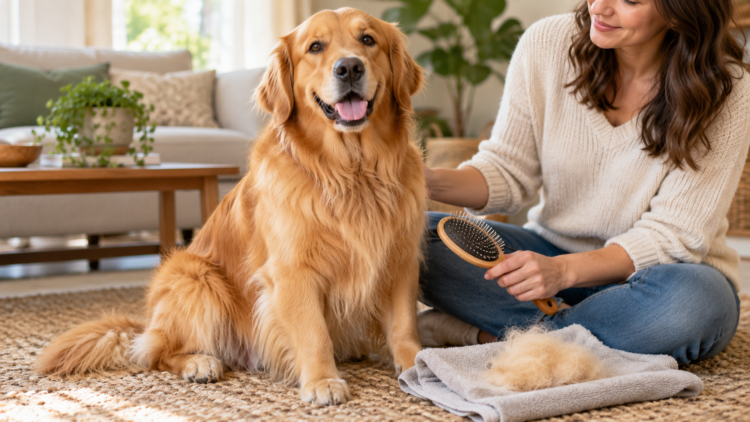
Finding Golden Retriever hair on your clothes, sofa, and car seats can feel like an endless chore. This breed has a substantial double coat, so shedding is part of normal life together. A useful routine focuses on collecting loose hair and keeping the skin comfortable.
The important distinction is between ordinary shedding and a new coat or skin problem. More fur in the brush does not automatically mean disease, but bald patches, soreness, or persistent itching deserve attention. Start by noticing the pattern before buying another grooming tool.
Why Golden Retrievers shed throughout the year
A Golden Retriever’s coat includes an outer layer and a softer undercoat. Loose hairs are released as the coat renews. Seasonal changes can make shedding more noticeable, while indoor living and individual differences can affect how the pattern looks.
The Golden Retriever Club of America’s breed guide explains why coat care belongs in everyday ownership. Expect regular grooming and household cleanup rather than a permanent solution that eliminates every loose hair.
Keep track of your own dog’s usual pattern. A sudden change matters more when you can describe what is different: the amount, the body area, the skin underneath, or the dog’s behavior during grooming.
Build a brushing routine your dog accepts
Start with short sessions on a stable, comfortable surface. Let your dog investigate the brush, reward calm behavior, and stop before frustration builds. Several brief sessions can be easier to manage than a long struggle.
Brush gently through manageable sections, following the direction of the coat and avoiding repeated pressure on one spot. Check feathering behind the ears, under the legs, and around the tail for tangles. Do not drag through a knot against resistance.
The AKC’s Golden Retriever grooming guide discusses regular brushing and more frequent attention during heavy shedding. Ask a professional groomer to demonstrate suitable tools and pressure for your dog’s particular coat.
Choose tools for the coat, not the biggest fur pile
A suitable pin brush and comb can help you work through the coat and check for missed tangles. Different tools do different jobs, so buying the sharpest-looking deshedding device is not automatically the best next step.
Watch the skin and your dog’s response. Flinching, pulling away, or redness means you should stop and review your technique. The quantity of hair collected is not a score to maximize with extra scraping.
If a mat sits close to the skin, arrange professional help. Cutting underneath it with household scissors can injure skin hidden in the tangle. Prevention through regular gentle attention is easier than removing a tightly packed mat later.
A manageable weekly coat-care plan
| Task | Practical approach |
|---|---|
| Routine brushing | Check the coat regularly and use short comfortable sessions |
| Heavy shedding periods | Add gentle sessions as needed |
| Tangle checks | Inspect feathering and areas where equipment rubs |
| Bathing | Match frequency and products to skin and lifestyle |
| Household cleanup | Wash bedding and collect hair from favorite resting spots |
| New skin changes | Arrange veterinary advice |
Use bathing as part of coat care
A suitable bath can help loosen dead coat, but frequency should reflect your dog’s activities and skin needs. A muddy swimmer and a dog with sensitive skin may need different plans. Ask your veterinarian or groomer if you are unsure.
Use a dog-appropriate shampoo and rinse thoroughly. Dry the coat carefully, including areas that hold moisture. If your dog dislikes a dryer, ask a groomer about a gentler approach instead of forcing a stressful session.
Do not use frequent baths or human hair products as a treatment for unexplained itching. Odor, greasy skin, repeated redness, or discomfort can have medical causes. Grooming should help you notice those changes, not hide them temporarily.
Keep the double coat and manage the house
Shaving is not a reliable way to stop normal shedding. It changes the coat covering rather than preventing hair from being released. Discuss clipping with a veterinarian when there is a medical or severe matting reason.
For ordinary cleanup, put washable covers on favorite resting places and keep a fur-removal tool nearby. Vacuum areas where hair accumulates and clean brushes regularly. A designated grooming towel can make a short session easier to tidy afterward.
These habits work best when they are convenient. Keeping supplies in one place and grooming before a routine household cleanup can reduce the feeling that shedding creates a separate daily project.
Write down which brush feels comfortable and which areas need professional help. That small record makes future grooming appointments clearer and helps everyone handling the dog stay consistent.
Know when shedding needs a veterinarian
Book a veterinary assessment for bald patches, persistent scratching, sores, scabs, unusual odor, or a sudden unexplained change in the coat. Hair loss with changes in energy, thirst, appetite, or weight also deserves a medical discussion.
Different problems can produce similar-looking hair loss. For example, VCA’s information on ringworm describes one possible cause of patchy loss. That example illustrates why a photograph or a seasonal assumption cannot establish the diagnosis.
Bring a timeline and clear photographs to the appointment. Mention recent diet changes, grooming products, medications, parasite prevention, and contact with other animals. Avoid starting supplements or medicated products before asking what is appropriate.
Conclusion
Golden Retriever shedding is manageable when expectations match the breed. Use gentle brushing, suitable bathing, and convenient cleanup habits while watching the skin beneath the coat. A new pattern of irritation or patchy loss calls for veterinary advice.
Can I stop my Golden Retriever from shedding?
Normal shedding cannot be eliminated. Regular coat care collects loose hair and helps prevent tangles, making it easier to live with while keeping your dog comfortable.
Does more brushing always help?
No. Excessive pressure or repeated passes can irritate the skin. Adjust frequency and technique to the coat, and ask a groomer for a demonstration.
Should I buy a supplement for shedding?
Ask your veterinarian first. A supplement does not replace an appropriate diet or assessment of unusual hair loss. The right choice depends on the reason for the problem.