How much to feed a Golden Retriever puppy depends on the puppy’s age, current weight, body condition, expected adult size, and the calories in the food. A chart that gives every puppy the same cups per day can be misleading. Two puppy foods may supply very different calories in an identical scoop.
The most useful Golden Retriever puppy feeding chart combines a suitable growth diet with measured portions and regular checks. Use the framework below to organize meals, then ask your veterinarian to set and review your puppy’s individual daily allowance.
Choose the right growth food first
Before calculating portions, confirm that the food supports growth, including the growth of large-size dogs where that distinction appears on the label. US labels describe large-size dogs as those expected to weigh 70 pounds or more as adults. Discuss your puppy’s expected size with your veterinarian rather than choosing by the word puppy alone.
AAHA recommends growth-appropriate nutrition until skeletal maturity and highlights the importance of avoiding excessive calcium in large and giant breeds. Do not add calcium or bone supplements to a complete puppy food unless your veterinarian specifically recommends them.
Our existing puppy food selection guide provides background. This article concentrates on turning the chosen food into a workable daily routine.
A meal-frequency planning chart
| Stage | Planning approach | What to review |
|---|---|---|
| Newly home after weaning | Keep the established food and small, frequent meals initially. | Ask the breeder or rescue for the written routine. |
| Young growing puppy | Many puppies manage three measured meals daily. | Confirm frequency and total calories with your veterinarian. |
| Older puppy | A move toward two meals may suit the individual. | Review growth, appetite, and tolerance before changing. |
| Approaching maturity | Continue the appropriate growth diet until advised otherwise. | Discuss when and how to transition to adult food. |
This is a routine-planning chart, not a calorie prescription. Medical conditions, poor appetite, and a very young puppy’s needs may require a different arrangement. Changing from three meals to two does not automatically mean reducing the total daily food.
Calculate portions from calories
Find the food’s calorie statement and ask your veterinary team for a daily calorie target. Then subtract the planned calories from treats or other foods. Divide the remaining allowance by the calories in one cup or one gram of the main food.
For illustration only, suppose a veterinary plan allows 1,200 calories daily, including 100 calories reserved for extras. If the food supplies 400 calories per cup, the main-food portion is 1,100 divided by 400, or 2.75 cups across the day. That example demonstrates arithmetic; it is not a recommendation for your puppy.
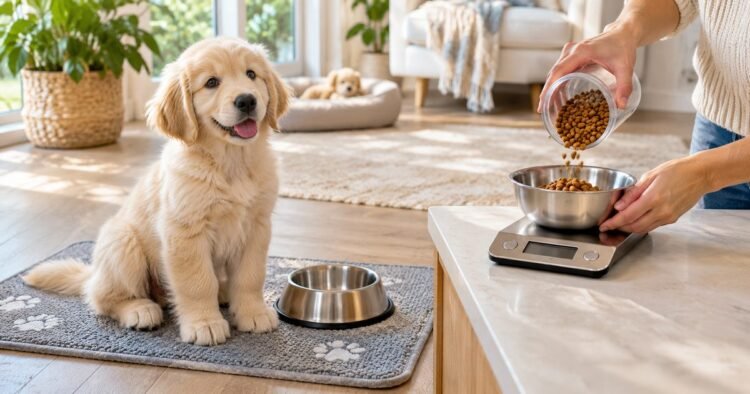
If the label provides 4 calories per gram, the same 1,100 food calories would equal 275 grams. Weighing that daily amount before dividing it into meals makes it easier for the whole household to follow the plan.
Count training rewards without losing nutrition
Puppies earn many rewards while learning their name, toilet routine, and handling skills. Keep part of the measured puppy food in a training container. That way, successful lessons do not automatically become extra meals.
Ask your veterinarian how much room your puppy’s diet allows for other treats. Choose small, age-appropriate pieces and supervise chews. Tell the veterinary team about edible chews, food-filled toys, table scraps, and anything a second caregiver regularly offers.
A practical household system uses one labeled daily container. Anyone feeding a meal or rewarding training takes food from that container. Keep drinking water freely available unless your veterinarian has given a specific medical instruction.
Use growth and body condition together
The aim is steady, healthy development rather than the fastest possible weight gain. A puppy can be heavy without being well grown. Long fur can also hide excess body fat, so appearance alone is an unreliable check.
Ask your veterinarian to demonstrate how the ribs, waist, and abdominal tuck should feel and look at your puppy’s stage. Record weights on the same scale when practical. Review the trend instead of changing food after one unusual reading.
For a simple record, write the date, weight, daily grams, appetite, stools, and any concerns on one line. Bring that record to puppy appointments. It gives the team more useful information than saying the puppy seems hungry all the time.
Build meals around your actual day
A three-meal routine might use breakfast after the morning toilet trip, lunch around midday, and dinner early enough to allow relaxed evening toilet opportunities. Choose times your household can repeat. The schedule should support supervision and rest rather than becoming a rigid clock test.
Place the bowl somewhere calm and comfortable. If other pets compete for food, feed them separately. Give your puppy time to eat without repeatedly taking the bowl away to test their tolerance; discuss any guarding concerns with a qualified reward-based professional.
Avoid common feeding-chart mistakes
Do not copy another puppy’s serving just because the dogs share a birthday. Do not assume a constantly interested eater needs unlimited food. Finally, check the label again after changing recipes: keeping the same cups can change calorie intake substantially.
Persistent diarrhea, vomiting, poor growth, or a new refusal to eat needs veterinary advice. Young puppies can deteriorate quickly. Do not keep experimenting with toppings or supplements while a puppy appears unwell.
Leave clear instructions for another caregiver
Write the food name, total daily grams, meal divisions, and treat allowance on one card. Include the veterinary clinic’s contact details and the signs that should prompt a call. A caregiver should not have to guess whether a training container is extra food or part of lunch. When the plan changes, replace the old card immediately. This simple handover is particularly useful during busy workdays, boarding, or visits from relatives who enjoy offering the puppy snacks.
Frequently asked questions
Can I leave puppy food out all day?
Measured meals make intake easier to track and can support a predictable toilet routine. Ask your veterinarian if your puppy has special feeding needs.
When should my Golden change to adult food?
Use your veterinarian’s assessment of growth and maturity. A birthday alone is less useful than the individual puppy’s development and the diet being fed.
Should portions increase every month?
Not automatically. Growth rate, activity, body condition, and calorie density determine adjustments. Review the plan rather than increasing food by a fixed monthly amount.