
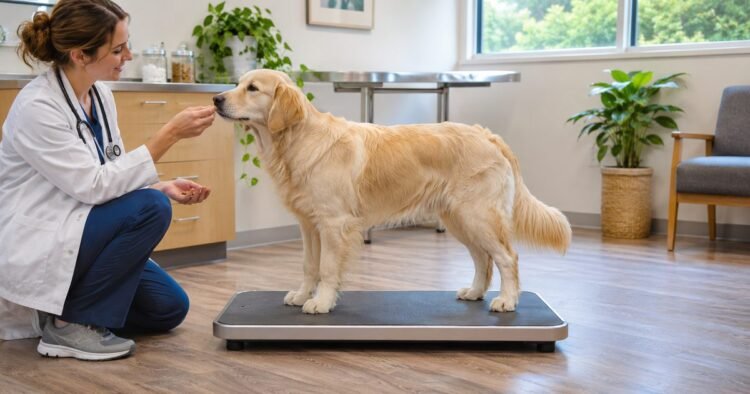
A Golden Retriever growth chart is most useful when it helps you follow your own puppy’s progress. It should not become a target that encourages you to feed a puppy up to someone else’s numbers. Genetics, sex, nutrition, and individual development all affect size.
For adult reference, the American Kennel Club lists males at 65–75 pounds and females at 55–65 pounds. Those breed ranges describe typical adults, not a required weight for every pet. A veterinarian should assess whether your particular Golden has a healthy body condition.
Golden Retriever size at a glance
| Adult reference | Male | Female |
|---|---|---|
| AKC weight range | 65–75 lb, approximately 29.5–34 kg | 55–65 lb, approximately 25–29.5 kg |
| AKC height at shoulder | 23–24 in, approximately 58–61 cm | 21.5–22.5 in, approximately 55–57 cm |
These figures are an orientation point. They do not diagnose an underweight or overweight dog. A small-framed adult may be healthy below a typical range, while a heavier dog could be carrying excess fat rather than extra skeletal size.
A growth-stage chart without false precision
| Stage | What you may notice | Useful owner action |
|---|---|---|
| About 8–12 weeks | Rapid changes and adjustment to the new home. | Establish a veterinary baseline and record the current diet. |
| About 3–6 months | Changing proportions, longer legs, and ongoing growth. | Track weight and body condition through puppy appointments. |
| About 6–12 months | A larger, stronger adolescent who may still be developing. | Review portions and exercise as the individual changes. |
| About 12–18 months | Growth may slow while body shape continues maturing. | Ask about skeletal maturity and feeding transitions. |
| About 18–24 months | Further filling out and behavioral development may continue. | Maintain a lean adult condition rather than chasing more bulk. |
The stages overlap. There is no validated, universal monthly weight table that can predict every Golden puppy’s healthy weight. If a breeder provides family growth records, share them with your veterinarian as context rather than treating them as a prescription.
When do Golden Retrievers stop growing?
Height, body mass, coat, and behavior do not mature on the same schedule. Large dogs can continue physical development beyond their first birthday. The AKC’s general growth guidance also emphasizes differences between individuals and breed sizes.
A Golden that looks adult may still need puppy-appropriate nutrition and exercise decisions. Ask your veterinarian when your dog is ready for a diet transition or a new high-impact sport. Looking tall enough is not a reliable test of joint maturity.
Make a simple weight-tracking chart
Use a notebook or spreadsheet with the columns date, age, weight, food amount, body-condition notes, and questions. Add measurements from veterinary visits and any reliable home weighing sessions. Consistent conditions are more useful than collecting many inconsistent numbers.
For example, write “five months, clinic scale, normal appetite, food unchanged” rather than recording a weight with no context. If a different scale gives a surprising result, confirm the measurement before assuming a major growth problem.
Take occasional standing photographs from the side and above on a nonslip surface. Keep the camera angle similar. These photographs can help you discuss changes, although they cannot replace hands-on assessment beneath a dense coat.
Check body condition beneath the fluff
Ask the veterinary team to show you how to feel the ribs and identify an appropriate waist and abdominal tuck. A thick Golden coat can make a lean dog look large or hide gradual weight gain.
Use the same assessment method over time. Write down the veterinary team’s explanation so everyone feeding the puppy understands the goal. “Bigger” is not a useful feeding objective, and visible ribs or a rounded shape need interpretation in context.
Our four-month-old Golden Retriever guide covers daily life at one specific stage. Use your dog’s individual veterinary growth plan whenever a generic example differs from that plan.
Support growth through appropriate food and movement
Feed a complete diet appropriate for growth and expected adult size. Measure portions, count edible extras, and review the amount as development changes. Adding supplements to make a puppy bigger can disrupt an otherwise suitable diet.
For movement, favor comfortable, self-paced play and manageable walks suited to your puppy’s health and development. Avoid pushing a growing puppy through long runs, repeated high jumps, or strenuous exercise to create a more muscular appearance.
The practical balance is ordinary activity with chances to stop and rest. Ask about safe socialization and walking locations while vaccinations are being completed. Growth care should support normal learning and enjoyable movement, not unnecessary isolation.
When should you contact your veterinarian?
Arrange advice for unexpected weight loss, poor weight gain, a sudden change in appetite, persistent digestive trouble, or concern about body condition. Limping, pain, difficulty rising, or an unusual gait also deserve attention. A puppy should not be pushed through discomfort to meet an exercise goal.
Bring your records, the exact food label, and information about treats and supplements. Note when the change started and whether anything else changed at home. Those details help the team decide what needs checking.
Keep growth records useful at home
Choose a regular place to store your notes and add the measurement method each time. Home estimates made while holding a wriggling puppy can be less precise than a clinic scale, so label them accordingly. Do not make daily feeding changes in response to small fluctuations. Instead, prepare questions for the next planned review, or contact the clinic sooner when a concerning change appears.
Update practical equipment as your puppy grows too. Check that the harness fits comfortably, the bed supports an easy resting position, and gates remain secure. Growing size changes how you manage the home even before the dog reaches adult weight.
Frequently asked questions
Can paw size predict adult weight?
Paws are not a dependable calculator. Family information and a veterinary assessment of the growth trend provide better context than a paw photograph.
Is a cream Golden always bigger?
Coat shade alone cannot establish adult size. Assess the individual dog’s frame, family history, and development instead of relying on color-based claims.
Should my puppy match an online monthly chart?
No. Use charts to organize questions and records. Healthy growth and appropriate body condition matter more than reaching a stranger’s number at a particular age.